
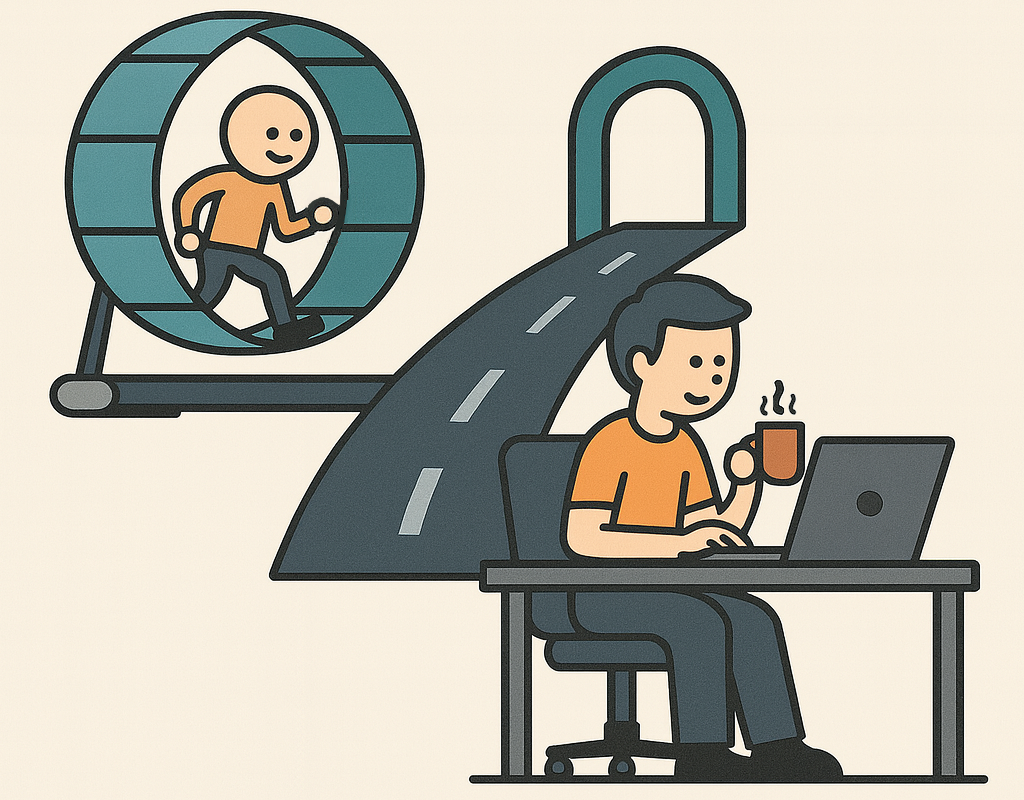
I recently had a conversation with a peer who was genuinely worried that we’re all going to lose our jobs to AI.
I get where the fear comes from. Every major shift in software has triggered the same concern. We heard it during the rise of the web, the move to cloud, and the spread of DevOps.
Each time, the job didn’t disappear.
It changed.
This shift is no different, even if it feels bigger.
What’s Actually Changing
AI isn’t removing engineers from the process. It’s changing where engineers spend their time.
There’s less value in:
- Boilerplate
- Manual glue work
- Repetitive orchestration
- Constant re-explaining of context between tools
There’s more value in:
- System design
- Workflow ownership
- Technical judgment
- Reviewing and steering automated output
- Understanding how pieces fit together over time
The job is moving up the stack. Not away from engineers.
Intelligent Workflows Change the Role
Traditional workflows assume everything is linear. Real work never is.
Intelligent workflows adapt. They route based on context. They pause when confidence drops. They escalate when judgment is required.
In this world, engineers don’t disappear. They become conductors.
AI handles repetition. Humans provide direction, correction, and intent.
That combination is more powerful than either one alone.
Junior Engineers Aren’t Going Away Either
One concern I hear a lot is that junior engineering roles will disappear.
I think the opposite is true.
Junior engineers are perfectly positioned to sit on the front lines. Reviewing output. Steering systems. Handling first-pass decisions. Escalating to senior engineers when judgment or experience is required.
Many of the struggles junior engineers face today aren’t about raw capability. They’re about reasoning through ambiguity. AI-assisted workflows actually create a safer environment to learn that skill with guardrails in place.
You either build the knowledge base or you don’t. This model accelerates learning instead of eliminating opportunity.
More Software Means More Jobs
When the cost of building software drops, organizations don’t build less.
They build more.
Lower friction leads to more experimentation, more internal tools, more products, and more ideas making it to production. That expansion creates demand, not contraction.
We’re already seeing new roles emerge around workflow design, AI review, and system stewardship. These are engineering jobs, even if they don’t look exactly like the ones we’ve had before.
The Bigger Picture
AI isn’t shrinking the profession.
It’s changing the work.
Teams that embrace intelligent workflows will build more, not less. They’ll need engineers who understand systems, intent, and judgment, not just syntax.
For engineers willing to evolve, this isn’t a threat. It’s an opportunity.