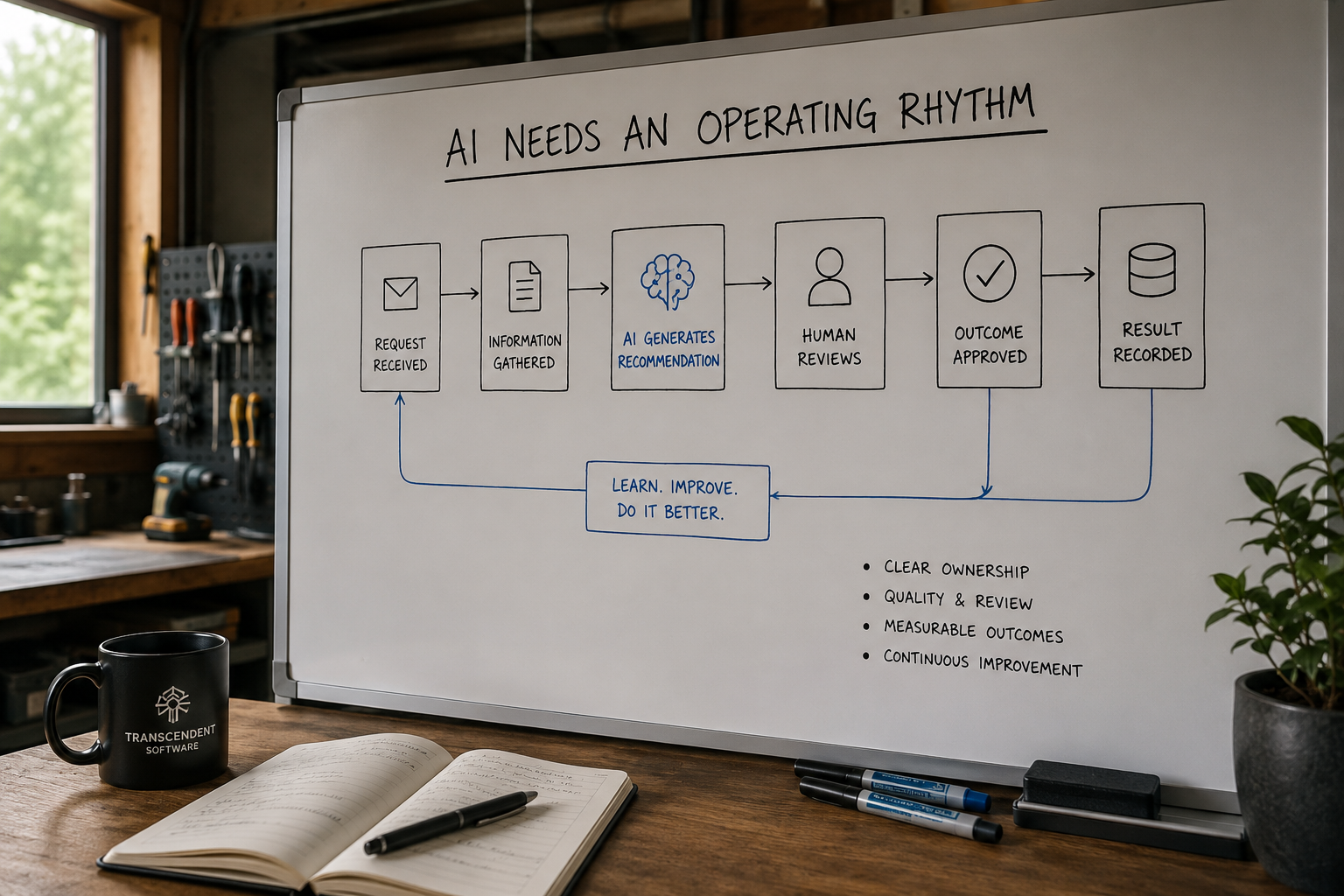
The Missing Layer in AI: Orchestration

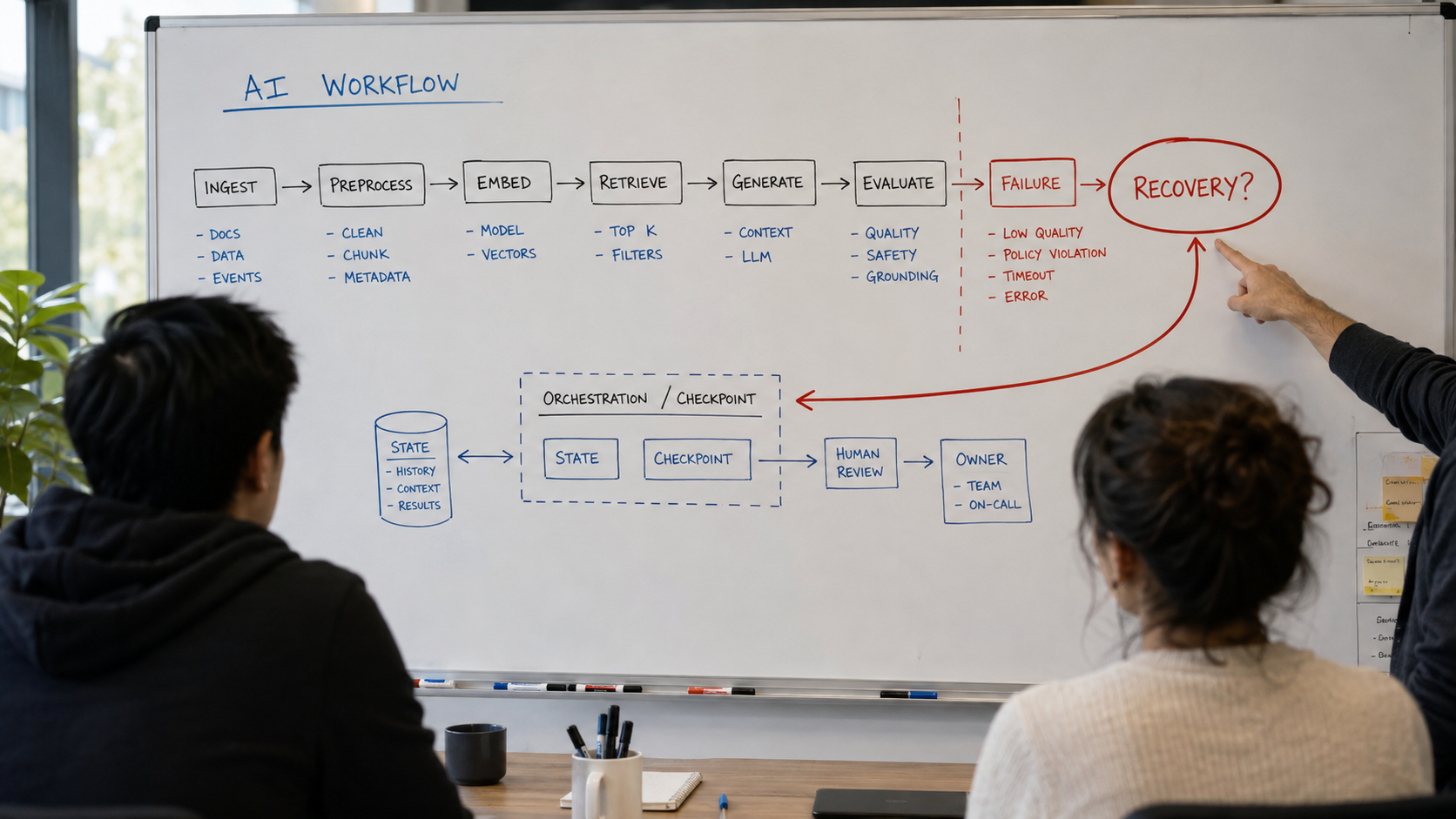
There has been a wave of AI releases recently. New models, improved performance, better benchmarks. Each step is meaningful, and the pace of progress is real. But when you start building real systems with these tools, a different picture emerges. Most failures are not happening at the model level. They are happening in how systems […]

Usable AI Systems Require More Than Capability

The AI space is moving quickly toward a common set of capabilities. Agent frameworks.Orchestration layers.Tool integration.Memory strategies.Security and governance considerations. These patterns are becoming widely understood. Large organizations are rapidly building toward them. This is a natural phase of the market. As concepts mature, feature sets begin to converge. However, capability alone does not create […]

Human-In-The-Loop Fails Without The Right UX

Human-in-the-loop is often described as a requirement for AI systems. Add a human for review.Add approval steps.Add checkpoints. On paper, that makes sense. In practice, it often fails. Not because the idea is wrong. Because the experience around it is. Most systems treat human interaction as an interruption. A modal.A notification.A separate screen. Something that […]

Intent-Driven UX Changes How AI Systems Actually Work

A lot of AI interfaces today are still built around the same patterns we’ve used for years. Pages.Forms.Buttons. Even when AI is involved, the experience often comes down to entering a prompt and waiting for output. That works, but it misses something important. It assumes the user knows what to do next. In practice, that’s […]

AI feature parity is coming. System design will be the differentiator.

AI capabilities are converging faster than most people expected. What felt differentiated six months ago is quickly becoming table stakes. Code generation.Agent workflows.Automated pipelines. More companies are building similar capabilities at a rapid pace. That shouldn’t be surprising. Large organizations have the resources to replicate features quickly once patterns become clear. But feature parity doesn’t […]

AI doesn’t replace systems. It makes them more important.

There’s a growing belief that AI is going to simplify software development. Write some prompts. Generate some code. Move faster. On the surface, that’s happening. But underneath, something else is going on. We’re not reducing complexity.We’re increasing it. More code is being created.More systems are being stitched together.More moving parts are showing up in places […]

AI Is Not Replacing SaaS

There’s a growing narrative that AI will replace SaaS. If AI can build anything, why pay for software subscriptions? The logic sounds compelling. It’s also flawed. Software is a tool. If you were an advanced AI system, would you reinvent a calculator every time you needed one?Or would you use the calculator that already exists? […]

Why Fundamentals Matter Most When the Pressure’s On

The trophy is easy to see. The work that earned it isn’t. When you watch a championship game played in brutal conditions, the lesson is obvious. The teams that survive aren’t the flashiest. They’re the ones that can execute the fundamentals when everything else breaks down. The 2025 Patriots are a good example of a […]

The Cost of Shipping ‘Almost’ Working Software

Before going any further, I’ll name the product I’ve been circling to and hinting at the past several posts. The system I’m building is called CoffeeBreak. It’s a human-in-the-loop AI teammate designed to assist across the entire software development lifecycle. I’ve avoided leading with the name because this problem exists whether CoffeeBreak ever ships or […]

The Problem Most Teams Are Trying to Solve Without Naming It

Most software teams aren’t short on tools. They have ticketing systems, CI/CD pipelines, observability dashboards, documentation platforms, chat tools, and now a growing set of AI-powered assistants layered on top of everything else. And yet, many teams still feel slower than they should. The Work Between the Work When teams describe their challenges, they often […]