I missed my normal Sunday writing window this week.
That is not a complaint. It is just what happened. We hosted a party on Saturday for the 250th birthday of the United States, and by the time Sunday came around, the weekend had already become the lesson.
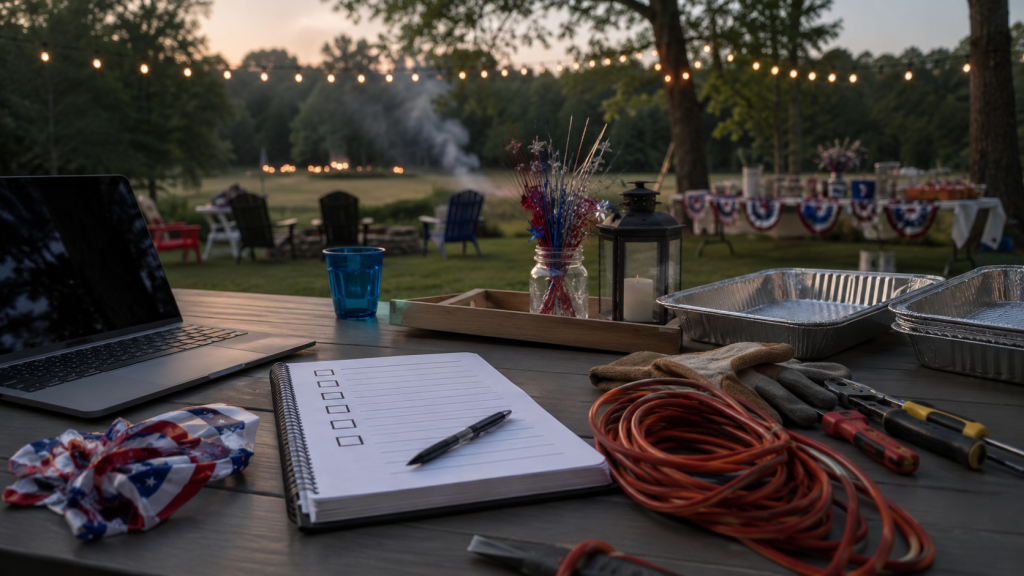
The party was spectacular. The fireworks were great. Friends came over, kids ran around, food was cooked, decorations went up, people helped set things up, and a few came back afterward to help clean up.
The visible part was the celebration.
The important part was everything around it.
That is true of a good party. It is true of a fireworks show. It is true of a country. And it is true of most business systems.
The part people notice is usually the result.
The clean interface. The automated report. The AI assistant that gives a useful answer. The workflow that suddenly takes five minutes instead of five hours. The dashboard that makes a decision easier. The launch that looks smooth from the outside.
But the result only works because of the work underneath.
Someone had to decide what mattered.
Someone had to sequence the steps.
Someone had to think about safety.
Someone had to know where the handoffs were.
Someone had to make sure the right people were involved at the right time.
Someone had to come back afterward and clean up what the first pass missed.
That last part matters more than people like to admit. A lot of technology projects are treated like fireworks. Build toward the big moment. Make the demo impressive. Get people to look up.
There is nothing wrong with a good demo. There is nothing wrong with a launch. Those moments matter.
But if no one owns the cleanup, the system starts to drift.
The data gets messy. The exception cases pile up. The workflow changes but the automation does not. The AI gives a good answer in one context and a questionable one in another. The team loses trust because no one knows whether the system is still doing what it was supposed to do.
That is where practical engineering begins.
Not with the flashiest tool.
Not with a promise that AI will solve everything.
With the unglamorous questions.
Who owns this workflow?
What happens when the answer is wrong?
Where does a human review it?
What context does the system need?
What should be automated, and what should stay deliberate?
How do we know it is still working after the exciting part is over?
The 250th birthday of the United States is a good time to remember that durable things require stewardship. Freedom does. Communities do. Businesses do. Software does.
You can celebrate the big moment and still respect the maintenance that makes the next one possible.
That is the way I think about AI and automation too.
The goal is not to add a dramatic layer of technology for its own sake. The goal is to build systems that help real people do real work with more clarity, consistency, and trust.
Sometimes that means AI.
Sometimes it means better software.
Sometimes it means cleaning up the process before adding anything new.
Sometimes the most valuable work is simply getting everyone aligned on what problem is actually being solved.
The show matters. People need to see progress. They need moments that build confidence.
But the work behind the show is what determines whether that confidence lasts.
That is where Transcendent Software spends most of its time.
Not chasing the loudest demo.
Solving the problem underneath it.