
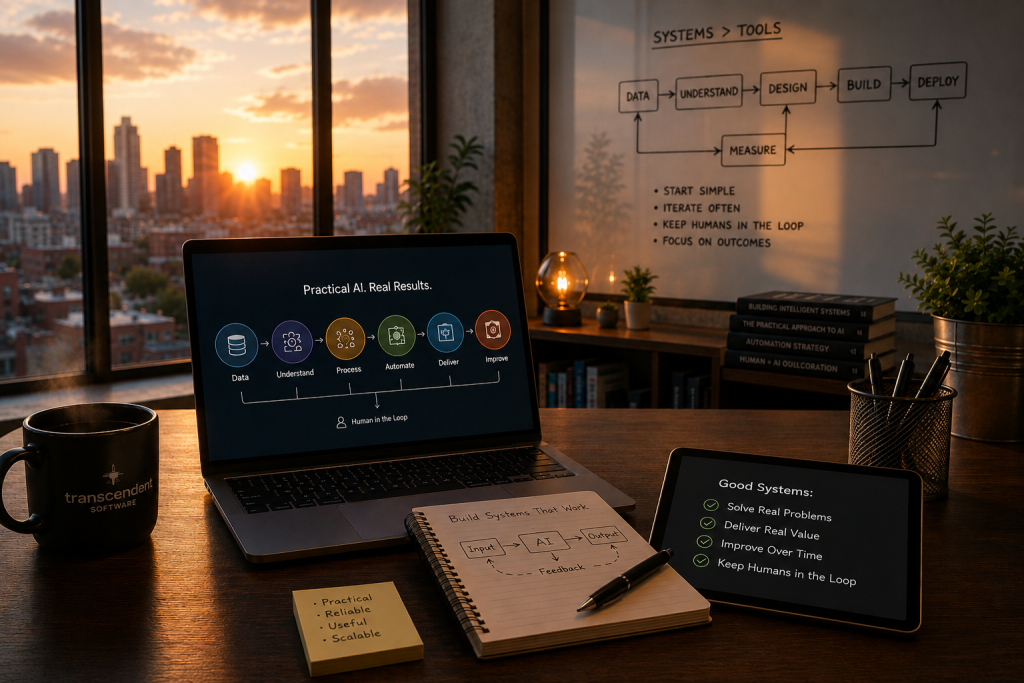
Being a builder is a skill.
I have spent the last few days helping a client prepare for a website launch. He designed the vision. Another company handled the original build. I came in afterward to help tie everything together, refine the rough edges, and make the entire experience actually work the way it should.
That part matters more than people realize.
I would never speak negatively about other builders because every team has its own process and priorities. But many companies today are optimized to produce deliverables, not necessarily systems that are easy to open up, adjust, refine, and evolve over time.
So I have spent a few late nights this week tuning details, improving workflows, fixing friction points, and trying to make the product feel right.
Honestly, I think that is exactly where we are with AI right now too.
The entire industry is moving incredibly fast. New models, tools, frameworks, and platforms appear almost daily. Everyone is trying to figure out how to build in an environment that keeps reshaping itself underneath them.
Generative AI accelerated all of this dramatically.
Right now, most companies are still experimenting with what AI can do. But as we move into this summer, I think the conversation starts changing. Less fascination. More practicality.
The real question is no longer:
“What can AI generate?”
The real question is:
“How do we build systems that actually work?”
How do we build systems that produce reliable outputs?
How do we reduce friction?
How do we create workflows that feel natural instead of forced?
How do we help systems remember, adapt, and improve over time?
How do we keep humans involved where judgment and context still matter most?
Those are the questions I think about constantly.
And honestly, I think this next phase belongs to practical builders.
Not hype merchants.
Not people chasing demos.
Not companies trying to bolt AI onto every possible surface whether it belongs there or not.
The winners will be the people who build systems that quietly make work better.
That is a big part of the philosophy behind CoffeeBreak. There is a lot happening underneath the hood technically, but as the beta approaches, my biggest goal is actually very simple:
I want it to feel easy.
If someone can sit down, accomplish something meaningful, and walk away without feeling friction or unnecessary complexity, then we did our job.
That is what good systems do.
The best technology often feels almost invisible. It supports people instead of overwhelming them. It helps without demanding constant attention. Like a good road trip in the summer, you should spend more time enjoying where you are going than thinking about the engine underneath the hood.
I think this summer is going to be an important turning point for AI.
The market is starting to mature.
The novelty is beginning to wear off.
Businesses are becoming more pragmatic.
People want results now.
Personally, I think that is a good thing.
Because this is where real builders tend to thrive.